AI Conversation Personalization: A Trend for Enhancing Customer Experience
Author
 Vareno
Published
Updated
Related Posts
- › AI Chatbots for Businesses: An Effective Solution for Sales, Customer Service, and Operations
- › Vietnamese AI Chatbot: A Smarter Solution for Better Customer Experience
- › What Is AI Chatbot Training? How to Train an Intelligent Chatbot for Your Business
- › What Is a RAG Chatbot? How It Works and Its Applications in Business
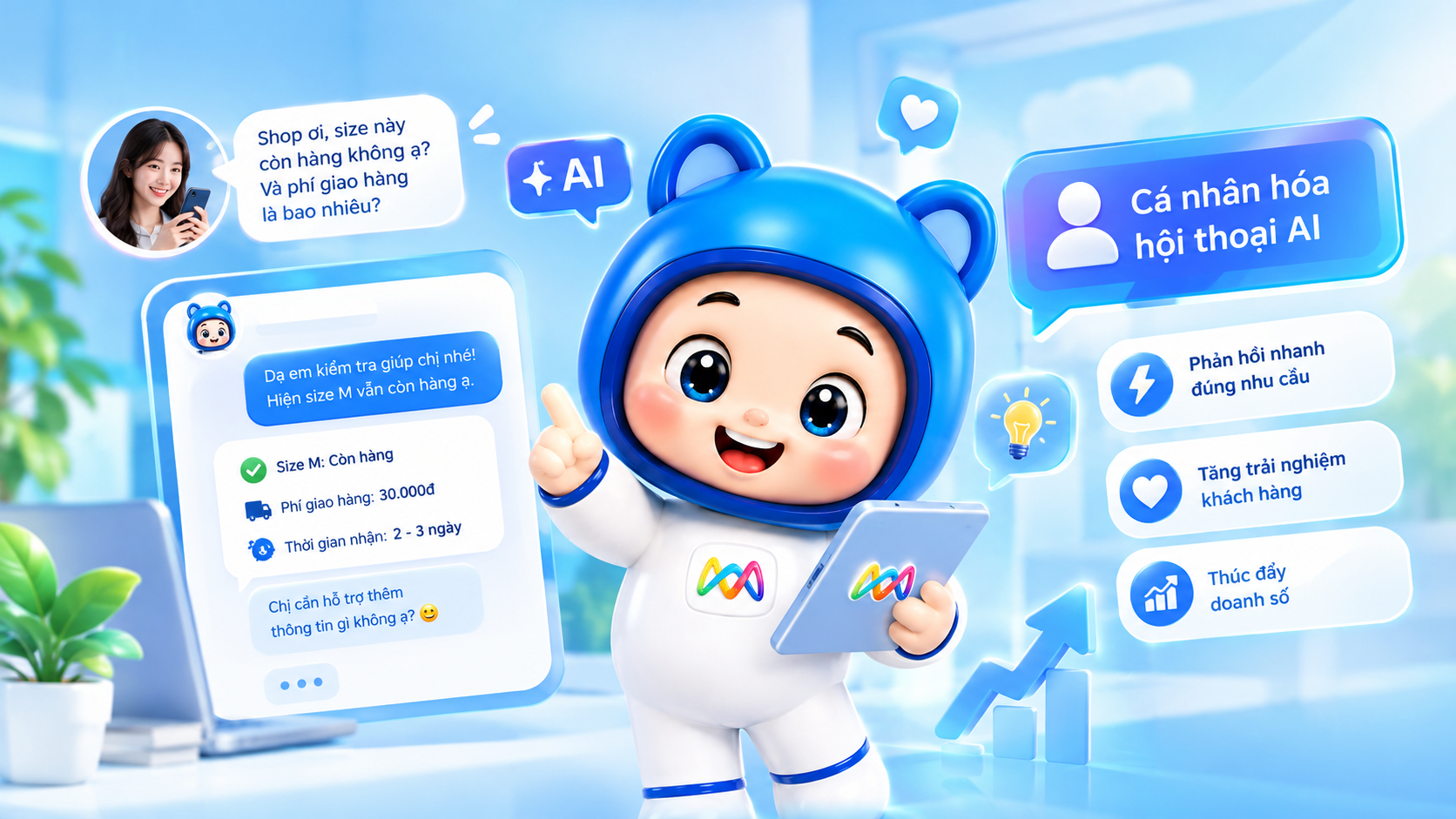
In the digital era, customers expect more than just fast responses. They also expect businesses to understand what they actually need. A response may be accurate, but without the right context, the conversation can feel robotic and result in missed opportunities to connect with customers.
That is why AI conversation personalization is becoming increasingly important for businesses. Instead of using a fixed script for every user, AI can analyze conversations, understand context and customer needs, and adjust its responses accordingly. As a result, each interaction becomes more natural, relevant, and closer to a genuine human-to-human conversation.
What Is AI Conversation Personalization?
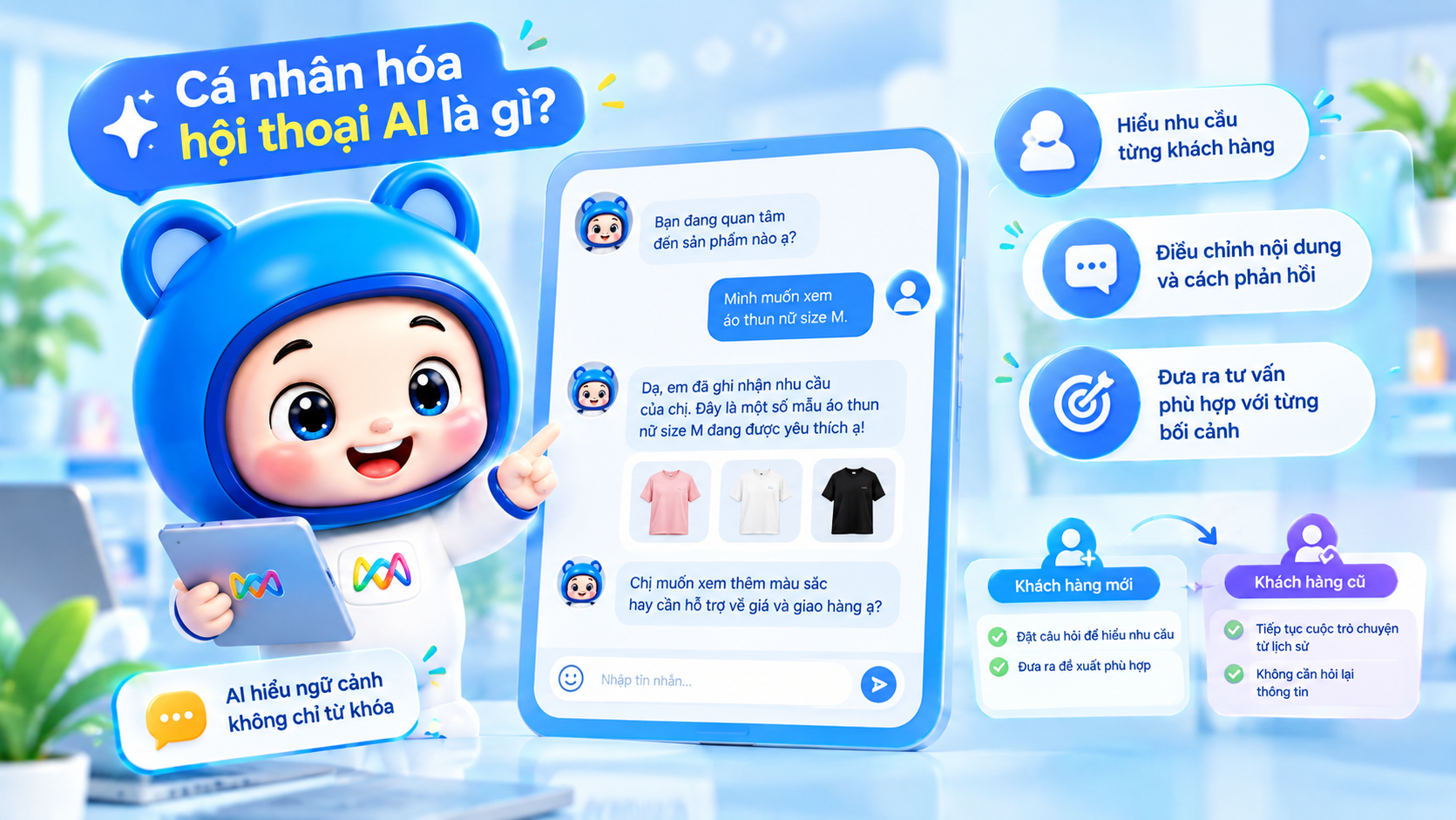
AI conversation personalization is the use of artificial intelligence to tailor content, responses and recommendations based on each customer’s information, needs, or context.
For example, when a customer has previously asked about a particular product, an AI chatbot can continue the conversation based on that information instead of asking the customer to repeat everything from the beginning. For new customers, AI can ask relevant questions to identify their needs before making recommendations.
The key difference lies in AI’s ability to understand context rather than simply responding to specific keywords. This makes conversations more flexible and creates a more natural interaction between customers and businesses.
Why Should Businesses Upgrade Their Customer Interaction Experience?
Today’s consumers are increasingly impatient with generic and repetitive responses. When an answer fails to address their actual concerns, they may quickly turn to a competitor.
- Speed must come with understanding: Customers want immediate solutions to their specific problems, not generic links that simply redirect them to a homepage.
- Customer service costs continue to rise: Support teams can become overwhelmed by answering hundreds of repetitive questions every day, especially during peak hours.
- Improve sales performance: Relevant recommendations delivered at the right moment can reduce hesitation and encourage customers to make purchasing decisions faster.
How Does an Intelligent Response System Work?
This process combines large language models with a brand’s internal knowledge base. The system typically operates through three key steps:
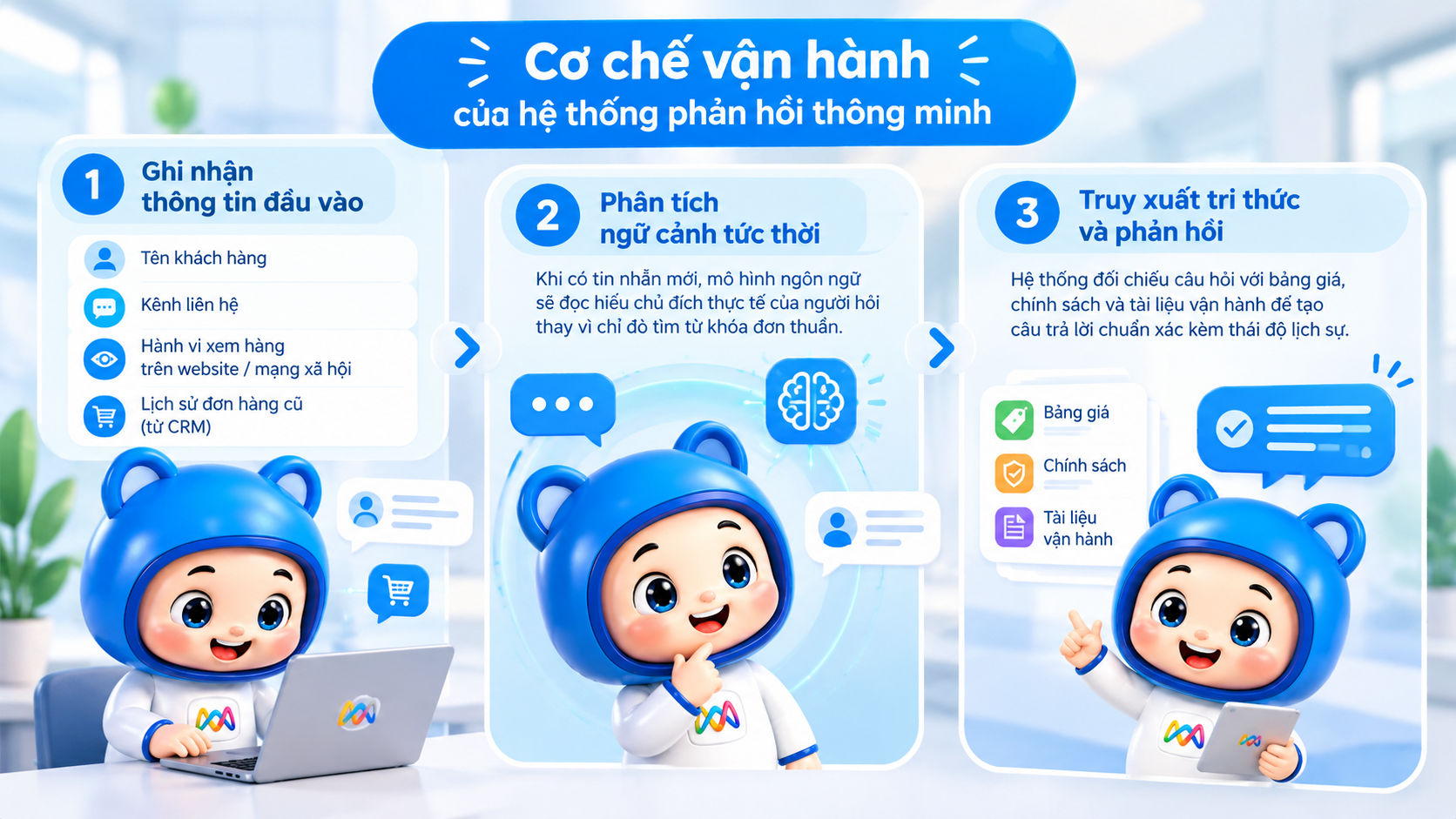
- Collecting customer information: The system can store information such as names, contact channels, website browsing behavior, or previous order history from a customer relationship management (CRM) system.
- Analyzing context in real time: When a new message arrives, the language model identifies the customer’s actual intent instead of relying solely on keyword matching.
- Retrieving knowledge and generating a response: The system compares the customer’s request with product information, pricing, policies, and operational documents to generate an accurate and appropriate response.
Benefits of AI Conversation Personalization for Businesses
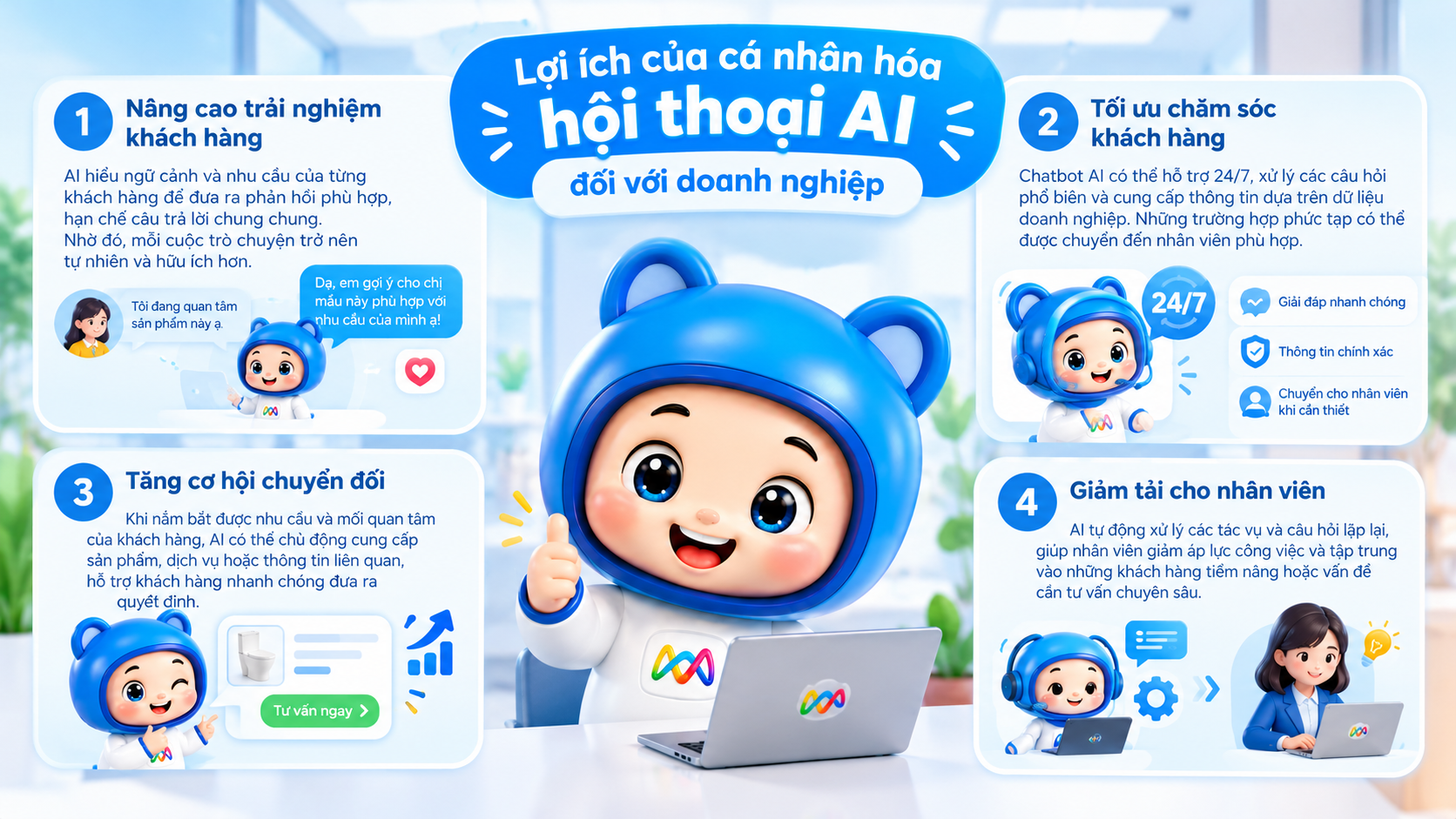
Enhance the Customer Experience
AI can understand each customer’s context and needs to provide more relevant responses while reducing generic answers. As a result, conversations become more natural, useful, and engaging.
Optimize Customer Service
AI chatbots can provide 24/7 support, handle frequently asked questions and deliver information based on the business’s own data. More complex cases can be transferred to the appropriate staff member.
Increase Conversion Opportunities
By understanding customer needs and interests, AI can proactively recommend relevant products, services or information, helping customers make decisions more quickly.
Reduce the Workload for Employees
AI can automatically handle repetitive questions and routine tasks, allowing employees to reduce their workload and focus on high-potential customers or issues that require more in-depth consultation.
Practical Applications Across Different Industries
Different industries can leverage AI-powered interactions in different ways to improve both customer experience and operational efficiency:
- Retail and E-commerce: Automatically remind customers about abandoned carts while recommending suitable discounts for products they are considering.
- Healthcare and Beauty: Send follow-up appointment reminders based on previous treatment records and provide personalized at-home care instructions after a service.
- Real Estate and Education: Identify preferences such as location, budget, or areas of interest, then categorize customer data and route qualified leads to the appropriate consultant.
How to Implement an Intelligent Conversation Solution
To ensure accurate and consistent performance, preparing high-quality business data is essential. Businesses can start with the following steps:
- Clean and organize source materials: Gather product pages, warranty policies, pricing information, and frequently asked questions to build the AI’s knowledge base.
- Define communication guidelines: Establish an appropriate tone of voice and communication style that reflects the company’s culture, while clearly defining topics that the AI should not make assumptions about.
- Set up human handover mechanisms: When the AI encounters questions outside its knowledge base or detects an upset customer, the system should immediately alert or transfer the conversation to a human employee.
Conclusion
Implementing AI conversation personalization is a practical approach for businesses looking to build customer trust while improving operational efficiency. Instead of allowing customers to leave without receiving meaningful support, an intelligent AI assistant can ensure that their questions are addressed promptly, accurately, and thoughtfully.
You might also like
- › AI Chatbots for Businesses: An Effective Solution for Sales, Customer Service, and Operations
- › Vietnamese AI Chatbot: A Smarter Solution for Better Customer Experience
- › What Is AI Chatbot Training? How to Train an Intelligent Chatbot for Your Business
- › What Is a RAG Chatbot? How It Works and Its Applications in Business
- › Common mistakes when using AI chatbots and effective ways to fix them
- › AI Insurance Chatbot: A Solution for Automating Consultation and Customer Service
- › Free vs Paid AI Chatbots: Which Is the Right Choice for Your Business?
- › Best AI Chatbot Platform for SMEs: Selection Criteria and Suitable Solutions