Common mistakes when using AI chatbots and effective ways to fix them
Author
 Vareno
Published
Updated
Related Posts
- › AI Conversation Personalization: A Trend for Enhancing Customer Experience
- › AI Chatbots for Businesses: An Effective Solution for Sales, Customer Service, and Operations
- › Vietnamese AI Chatbot: A Smarter Solution for Better Customer Experience
- › What Is AI Chatbot Training? How to Train an Intelligent Chatbot for Your Business
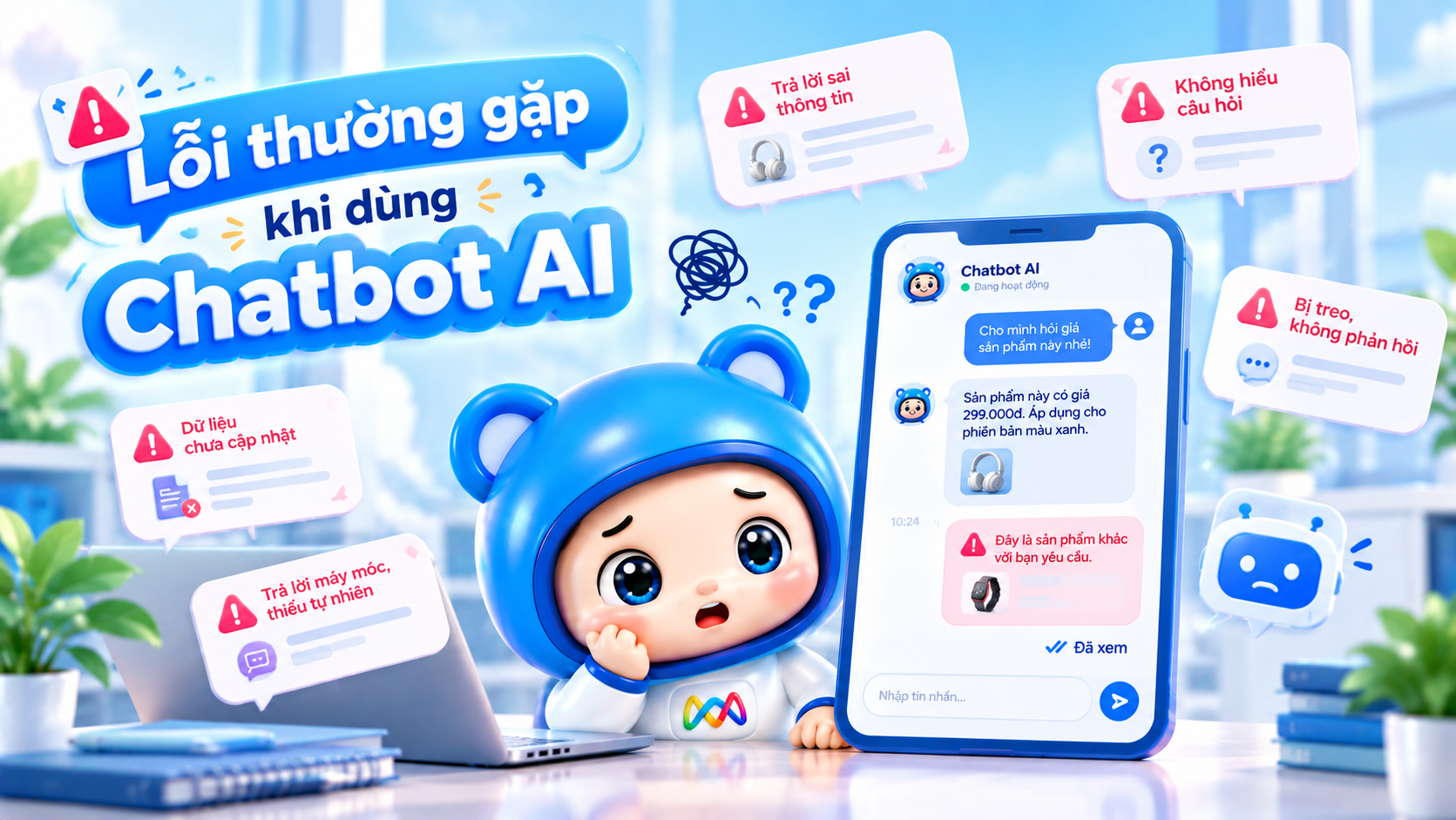
A customer sends a message asking about the price, but the system provides specifications for a different product. Sometimes, a customer types a two-line question, yet the screen only shows “seen” and remains silent. These common mistakes when using AI chatbots frequently occur when stores rush to deploy automated assistants on fanpages or websites without properly preparing their data. The direct consequence is that customers become impatient, close the chat, and turn to competitors.
Why Can AI Chatbots Make Mistakes?
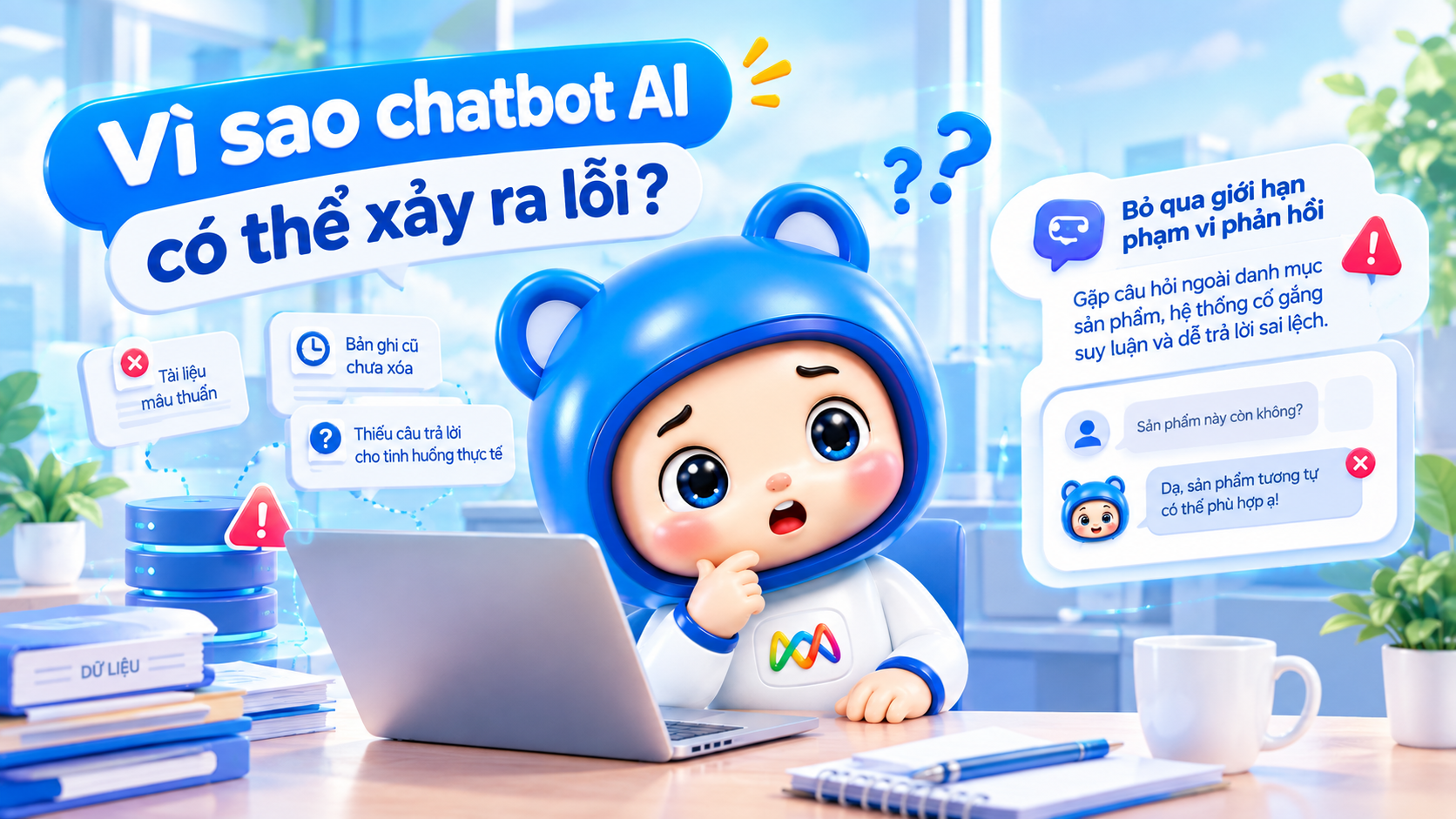
Artificial intelligence does not simply make up information when it is properly configured. Most issues stem from input training data containing conflicting documents, outdated records that have not been removed, or missing answers to real-world situations.
Many administrators also overlook the importance of defining clear response boundaries for language models. When faced with a question outside the product scope, instead of stopping and transferring the conversation to a human agent, the system may attempt to generate an answer based on its broader knowledge, resulting in information that is completely inconsistent with the actual business.
Common Mistakes When Using AI Chatbots
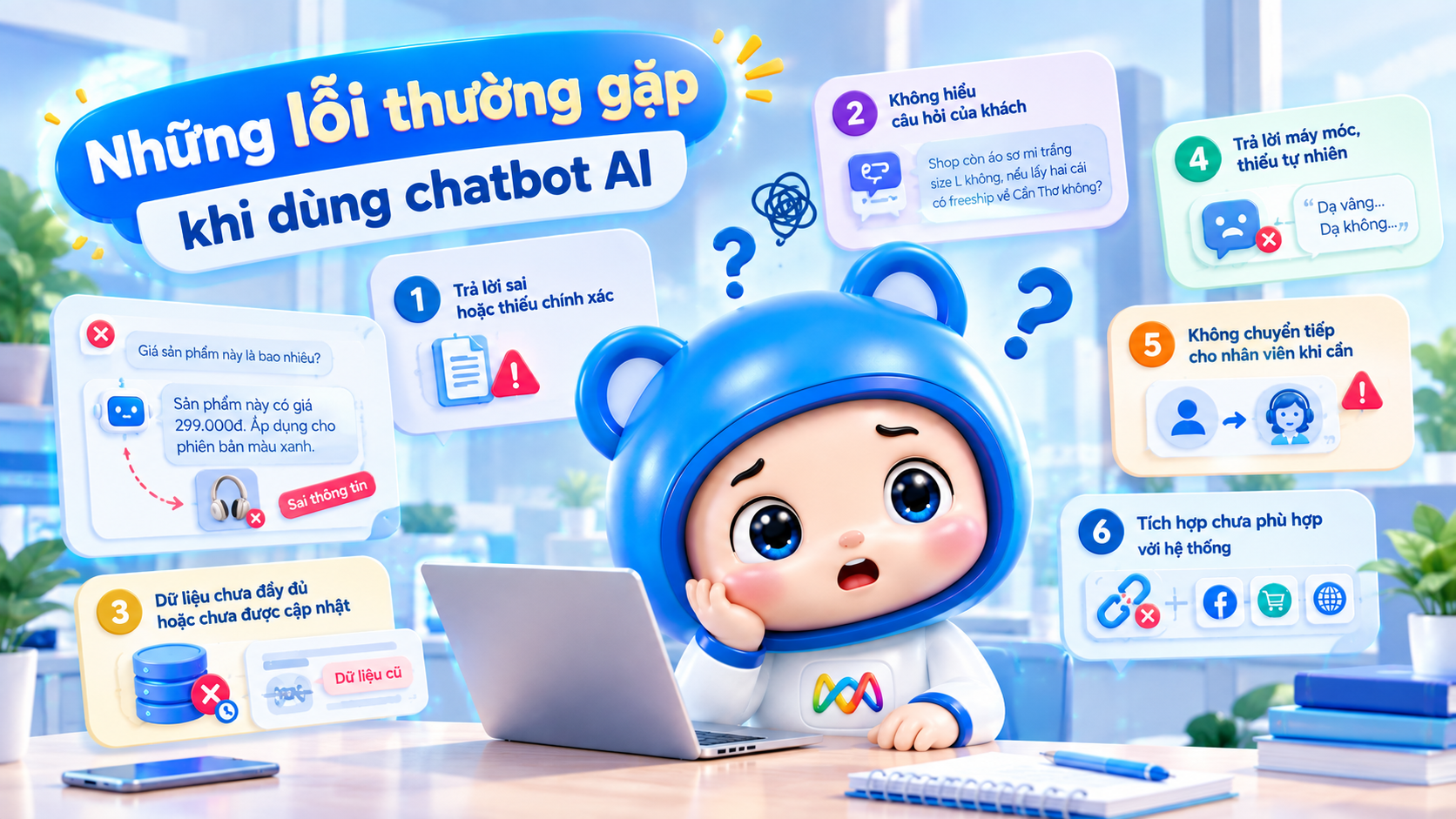
AI Chatbots Provide Incorrect or Inaccurate Answers
This is one of the biggest concerns for businesses. A chatbot may provide incorrect answers when the information in its knowledge base is incomplete or when its response scope has not been clearly defined.
To minimize this issue, businesses should build an official information source, update it regularly, and establish rules that prevent the chatbot from making assumptions when it does not have enough information.
Chatbots Fail to Understand Customer Questions
Vietnamese customers have diverse messaging habits: they use abbreviations, omit accents, use regional expressions, or combine multiple questions into a single message. Consider this real-world example:
“Does the shop still have the white shirt in size L, and if I buy two, is shipping to Can Tho free?”
This question contains three pieces of information: product type, size, and shipping conditions. When information processing is inadequate, the AI chatbot may fail to understand the entire question and only recognize the keyword “white shirt,” then return a general product list instead of answering the customer’s question about shipping fees.
Chatbot Data Is Incomplete or Outdated
A chatbot can only perform effectively when it is provided with relevant information. If products, pricing, policies, or business processes change but the chatbot’s data is not updated, the system may provide outdated information.
Therefore, businesses should establish a regular data review and update process to ensure that the chatbot always uses the latest available information.
Chatbots Respond Mechanically and Lack Natural Interaction
Some chatbots can respond quickly, but their communication style still resembles a fixed script, making customers feel that the interaction is unnatural.
To improve this, businesses should establish a communication style that matches their brand and create a variety of conversation scenarios so the chatbot can respond more naturally and flexibly.
Failure to Transfer Conversations to Human Agents When Necessary
Some situations are beyond the capabilities of artificial intelligence, such as customers wanting to negotiate large wholesale orders, complaining about service quality, or requesting complex technical support. Without an immediate handoff mechanism, allowing the virtual assistant to continue giving repetitive or irrelevant responses can turn the situation into a customer service crisis.
Chatbot Integration Is Not Compatible With Existing Systems
Many automation tools do not integrate smoothly with sales management platforms or social media communication channels. These issues can cause messages to become stuck, response times to increase by several minutes, or the system to lose connection midway through a conversation, disrupting the entire customer support flow.
How to Fix Common AI Chatbot Issues
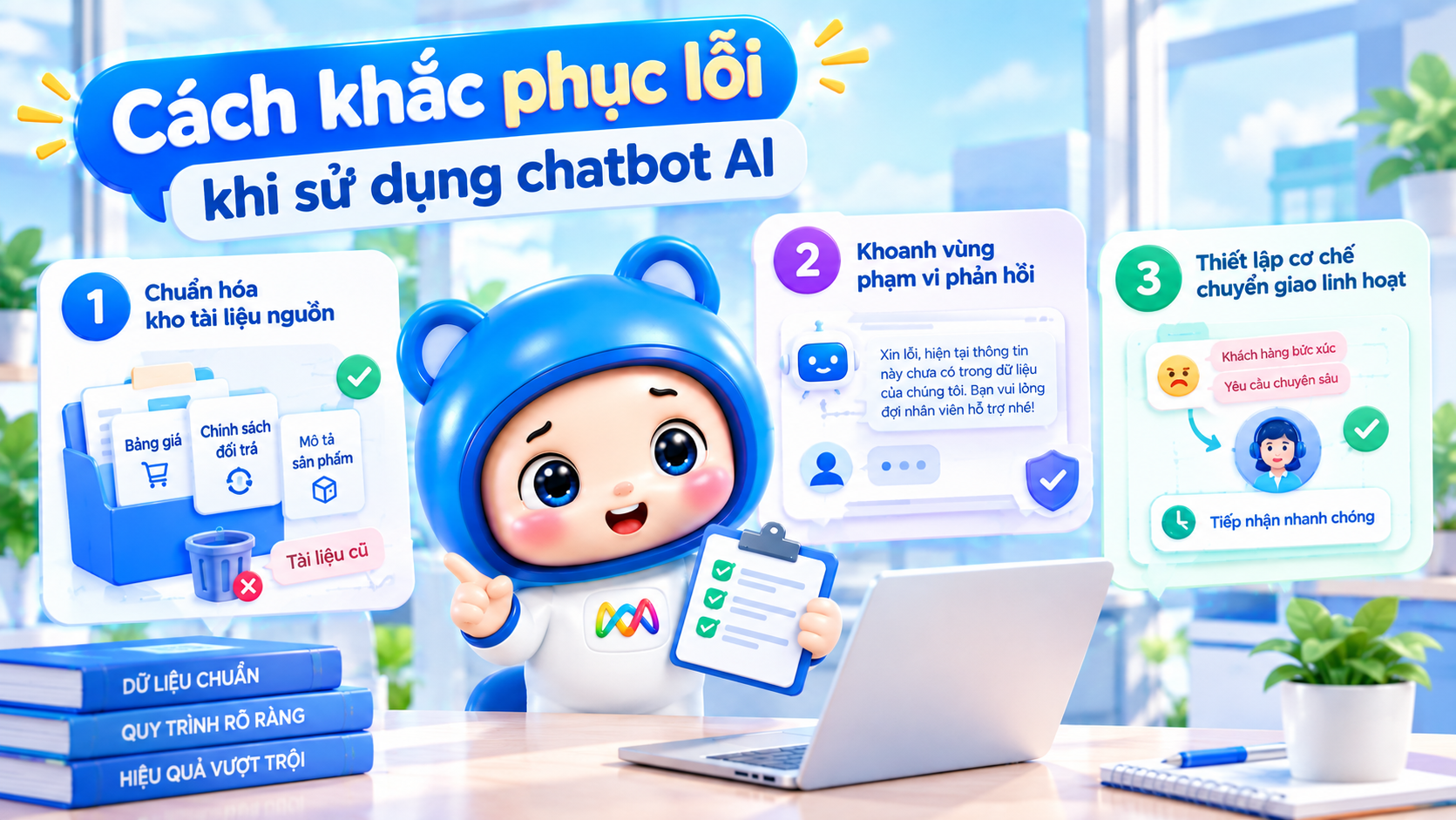
To minimize interruptions and ensure accurate responses, businesses should review their operating processes through the following steps:
- Standardize the source knowledge base: Consolidate pricing information, return policies, and product descriptions into well-structured documents. Completely remove outdated policies to prevent the system from retrieving old information.
- Define response boundaries: Establish strict rules so that when the chatbot encounters information that is not available in its training data, it politely declines to answer and guides the customer to wait for human assistance instead of making assumptions.
- Set up a flexible handoff mechanism: Configure triggers to detect negative sentiment or complex requests so the system can immediately notify an available employee to take over the conversation.
How Can Businesses Make AI Chatbots More Effective?
Instead of viewing a chatbot simply as an automated response tool, businesses should consider it an AI assistant that is continuously improved based on data and real customer feedback.
An effective process can include: data standardization → chatbot setup → system integration → real-world testing → monitoring and optimization. This approach helps the chatbot become increasingly aligned with customer needs and the business’s operational processes.
Conclusion
Understanding common mistakes when using AI chatbots is an important step in helping businesses minimize errors, optimize operations, and improve customer service quality. Choosing the right AI solution allows chatbots to operate more effectively and meet real-world business needs.
With Vareno AI, businesses can easily apply AI to their customer service and operational processes, moving toward a more automated, intelligent, and professional system.
You might also like
- › AI Conversation Personalization: A Trend for Enhancing Customer Experience
- › AI Chatbots for Businesses: An Effective Solution for Sales, Customer Service, and Operations
- › Vietnamese AI Chatbot: A Smarter Solution for Better Customer Experience
- › What Is AI Chatbot Training? How to Train an Intelligent Chatbot for Your Business
- › What Is a RAG Chatbot? How It Works and Its Applications in Business
- › AI Insurance Chatbot: A Solution for Automating Consultation and Customer Service
- › Free vs Paid AI Chatbots: Which Is the Right Choice for Your Business?
- › Best AI Chatbot Platform for SMEs: Selection Criteria and Suitable Solutions